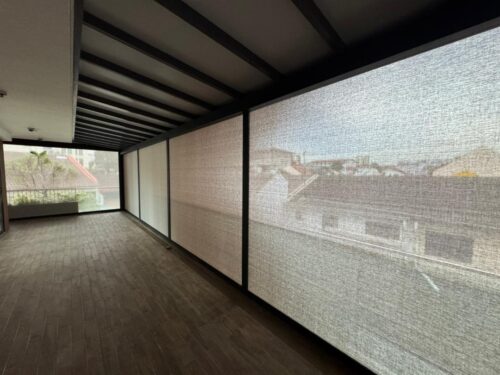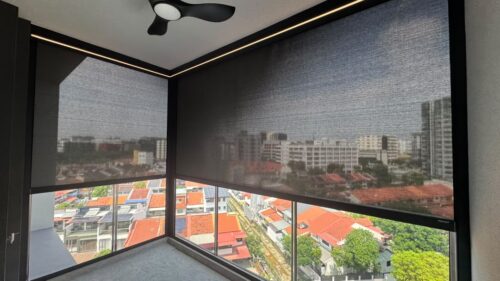
When comparing zip blinds, fabric colour, motor options and price are usually easy to identify. How the system keeps the fabric evenly supported can be less obvious.
Before choosing zip blinds, ask how the system manages fabric tension. This affects how the material sits across your opening and is one consideration when assessing appearance, operation and long-term performance.
At mc.2, we encourage homeowners to understand what maintains that support during everyday use. A newly installed blind shows you the initial finish, but the tensioning design helps explain how the system is intended to work over time.
What Is Fabric Tension in Zip Blinds?
Zip blind fabric tension refers to the pulling forces that help hold the material taut within the blind system.
The side tracks retain the fabric edges, while the roller, bottom bar and any dedicated tensioning mechanisms work together to support the panel. The arrangement varies between systems.
Properly managed tension helps the fabric sit evenly across the opening. However, the finished appearance also depends on the fabric, panel dimensions, installation and surrounding conditions.
When comparing quotations, ask how these elements work together rather than judging the fabric alone.
1. Fabric Tension Influences the Finished Appearance
A zip blind covers a large part of your balcony opening, so unevenness can become noticeable once the fabric is lowered.
Fabric tension helps support a smoother appearance. When that support is uneven or insufficient, the material may appear loose, sagged or distorted.
However, outdoor blind fabric is flexible. Its appearance can vary with the opening size, installation, weather and operating position. It should not be expected to look identical to a rigid glass panel.
When viewing a demonstration, look at the full panel and ask:
- Does the fabric appear evenly supported?
- Is the bottom bar level?
- What appearance should I expect at different stopping positions?
- Which variations are normal for this particular system?
These questions give you a clearer reference than a close-up photograph alone.
2. Tension Should Be Considered Alongside Wind Performance
For balcony zip blinds in Singapore, wind exposure is worth discussing during the site assessment.
Wind places pressure on the fabric. The side retention system, tensioning design and supporting components all need to be considered when assessing the complete blind.
However, a taut-looking panel does not establish its wind resistance. Manufacturer guidance identifies fabric type and installation as factors affecting wind performance.
Before purchasing, clarify:
- Is the proposed system suitable for my balcony’s exposure?
- What wind-testing information applies to this model?
- What operating instructions should I follow during strong winds?
- Are there positions in which the blind should not be left?
The aim is to understand suitability for your actual opening, alongside the showroom appearance.
3. More Tension Is Not Automatically Better
The objective is controlled fabric tension that suits the system.
Simply pulling the material tighter does not resolve every cause of sagging or creasing. Fabric selection, accurate measurement, track alignment and correct setup remain important.
For example, an uneven finish caused by installation requires a different assessment from temporary marks left by rolled storage.
Ask the supplier:
- How is tension established during installation?
- What mechanism helps maintain it?
- Does the system require periodic adjustment?
- How would persistent unevenness be assessed?
A useful explanation should connect the design to what you can expect during normal use.
4. Look Beyond the Initial Finish
Your zip blinds will be raised, lowered and exposed to the conditions at your home. It is therefore worth asking how the system has been designed for repeated operation.
A demonstration can show the current appearance and movement, but it cannot establish years of performance on its own.
If you are comparing durable zip blinds, discuss the tensioning mechanism alongside:
- the fabric’s suitability for outdoor use
- the proposed panel dimensions
- installation requirements
- recommended cleaning and servicing
- support for replacement components
At mc.2, we encourage homeowners to evaluate these details together. Maintaining a consistent finish depends on more than one component.
5. Understand What Creases and Sagging May Indicate
A visible wrinkle does not, by itself, identify a tensioning fault.
Some track-guided blinds can show temporary looseness at certain heights. Newly installed material may also need time to settle after being tightly rolled for storage or transport.
What matters is whether the appearance is expected for that model and whether the blind operates normally.
Contact your supplier if you notice:
- persistent or worsening sagging
- one side appearing significantly looser
- an uneven bottom bar
- unusual resistance during operation
- fabric that appears to be catching
Avoid adjusting the tensioning components yourself. An inspection can help establish whether the issue involves fabric, alignment, setup or another part of the system.
How Does MAGNAZip+ Manage Fabric Tension?
At mc.2, fabric tension is a key consideration in our MAGNAZip+ zip blind system.
MAGNAZip+ combines N35 neodymium magnets in the bottom bar, a Somfy Maestria motor and a tension coil mechanism to help maintain fabric tension and support a smooth finish.
For homeowners, the useful question is how that design applies to their installation. Opening dimensions, fabric selection and site conditions still need to be assessed.
We encourage you to experience MAGNAZip+ at our showroom. Seeing a full-size blind operate gives you an opportunity to examine the fabric support, understand the mechanism and ask questions about your own balcony.
Zip Blind Fabric Tension Checklist
Before accepting a quotation for zip blinds in Singapore, use these questions to compare your options:
- Tensioning design: How does the system maintain fabric support?
- Fabric appearance: What should I expect when the blind is fully lowered or stopped partway?
- Opening size: Is the proposed panel suitable for my dimensions?
- Wind exposure: What specifications and operating guidance apply?
- Installation: Who will measure, align, set up and test the blind?
- Maintenance: What cleaning, inspections or servicing are recommended?
- After-sales support: Who assesses persistent sagging, creasing or uneven operation?
Understanding why fabric tension matters gives you a stronger basis for choosing zip blinds. You can assess the mechanism, workmanship and support behind the finished appearance.
If you are comparing options, visit the mc.2 showroom to experience MAGNAZip+ and speak with our team about a suitable system for your home.