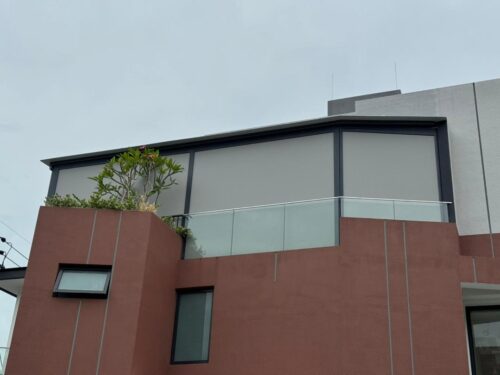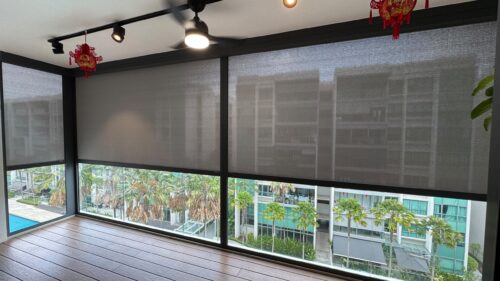
To keep rain out of a condo balcony in Singapore, identify where wind-driven water enters, keep drainage clear and protect vulnerable belongings before considering an outdoor screen. If you are exploring blinds in singapore, remember that shade, rain reduction and full weatherproofing are different goals. No fabric blind should be assumed to turn an outdoor balcony into a watertight room.
1. Why Does Rain Enter a Covered Balcony?
A roof or balcony slab blocks falling rain, but wind can push water sideways through an open railing or wide outdoor opening. The result may be wet tiles, splashed furniture and moisture near the living-room doors even when the balcony is sheltered overhead.
The Meteorological Service Singapore identifies thunderstorms, Sumatra squalls and monsoon surges among Singapore’s major rain-producing weather systems. Rain direction and intensity can change, so exposure varies from one condominium stack or floor to another.
Check where the water actually comes from
After the weather clears, look for splash marks near the railing, puddles around the floor outlet or dampness around adjoining walls. Water dripping through a ceiling or wall may signal a building defect, not a problem that a blind can solve.
2. Keep Balcony Drainage Clear First
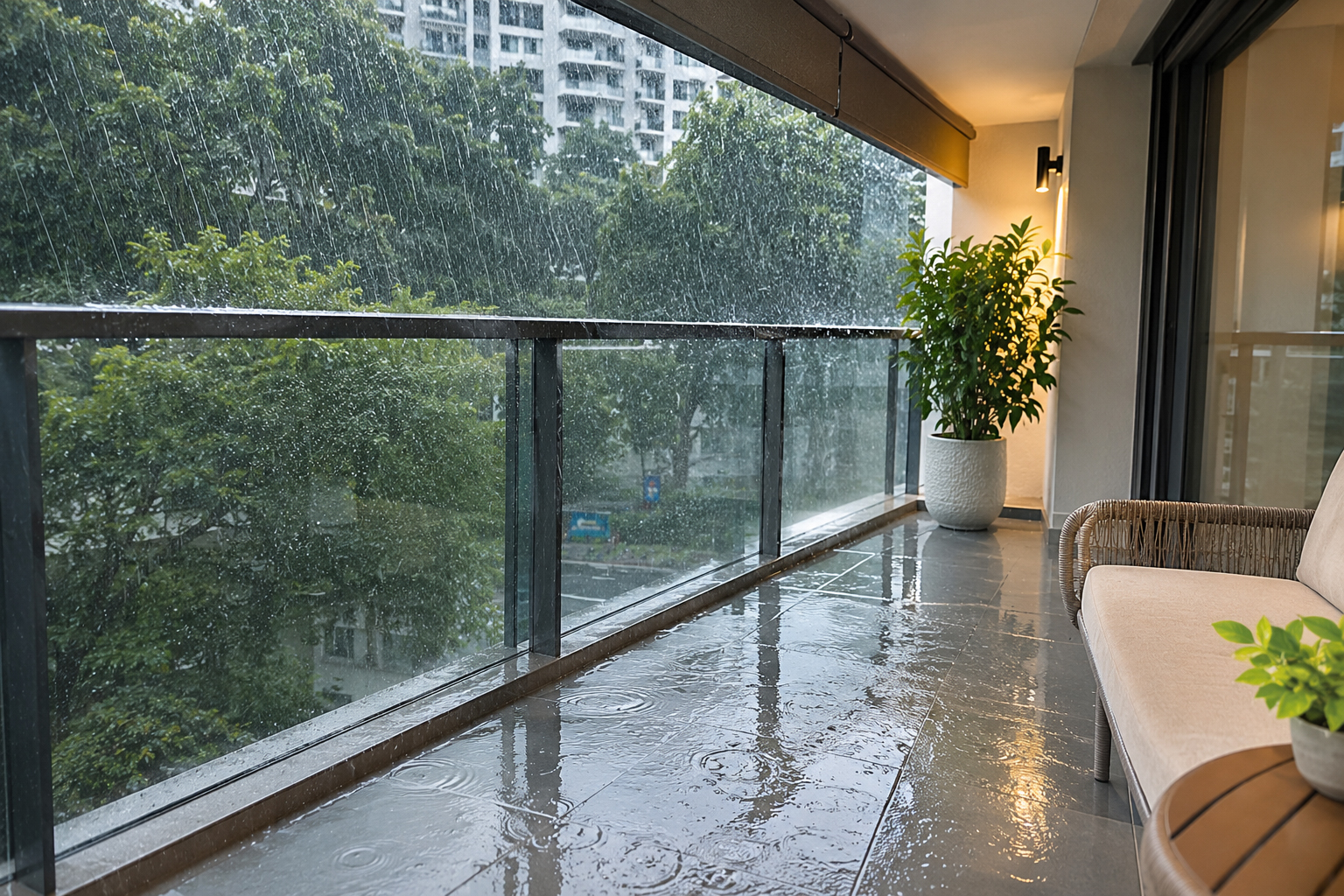
A balcony can remain wet long after a shower if water cannot flow to its intended outlet. Check accessible drain grates for leaves and debris, and avoid placing pots, outdoor rugs or storage boxes directly over the drainage path.
Singapore’s PUB flood-safety advice stresses keeping drains and drainage systems maintained and free of blockages. The same basic principle matters for balcony housekeeping, even though a residential balcony is not the same as a flood-prone property.
If water repeatedly ponds, overflows or crosses the threshold into the home, contact the managing agent or a qualified professional. An outdoor blind does not repair drainage or waterproofing defects.
3. Reduce Splash Damage Without Major Renovation
Move cushions, electronics and moisture-sensitive furniture away from the exposed edge. Choose outdoor-rated furniture, store soft furnishings indoors when rain is forecast and use raised furniture feet where appropriate so minor surface water can dry more easily.
Try a simple rain-path record
Over two or three rain events, note which side of the balcony becomes wet first, the approximate wet zone and whether water stays after rain stops. Take photos only when conditions are safe. This record helps distinguish a splash problem from a drainage problem and gives an installer useful site context.
Avoid improvised lightweight plastic panels or loose coverings that could detach in gusts. Any permanent change to the building exterior needs to be assessed against your development’s requirements.
4. Compare Practical Balcony Rain-Protection Options
Choose a measure according to the problem you have observed. Some approaches protect belongings, while others reduce rain entering the opening; they are not equally effective or interchangeable.
| Approach | Best use | Important limitation |
| Move furniture and use covers | Reduce exposure of belongings | Does not stop rain entering |
| Outdoor roller blind | Shade and some splash reduction in sheltered spaces | Open edges can admit sideways rain |
| Guided zip blind | More controlled fabric edges across an opening | Not a sealed wall or all-weather enclosure |
| Permanent glazing or enclosure | More complete enclosure where permitted | Requires separate design, ventilation and approval checks |
For a broader overview of outdoor roller and side-guided systems, explore mc.2’s outdoor blinds range. Ask how the system handles your balcony’s actual exposure rather than relying on a generic “rainproof” label.
5. When Can Zip Blinds Help With Wind-Driven Rain?
Zip blinds use vertical side-retention tracks to hold fabric edges in place as the blind rises and lowers. Compared with an open-edge outdoor roller, this can reduce the gaps through which wind-driven rain or debris enters a sheltered balcony.
For homeowners comparing zip blinds in Singapore, this makes the system worth assessing when sideways rain regularly reaches the seating area and shade or privacy is also a priority. mc.2 offers motorised options including MAGNAZip+ and selected RENSON outdoor shading systems.
What zip blinds cannot promise
Zip blinds are not fully sealed windows. Rain performance depends on the fabric, openings, wind direction, panel dimensions and installation. Ask about product-specific test conditions, operational limits and maintenance; follow the manufacturer’s guidance during severe weather.
6. Check MCST Rules and Installation Conditions
Condominium developments may set rules for façade appearance, blind colour, placement and fixing methods. Ask your Management Corporation Strata Title (MCST) or managing agent what approval or drawings are required before ordering an outdoor blind.
The installer should also assess the opening width and height, solid mounting points, any structural columns, drainage clearance and access for servicing. If motorised blinds are proposed, confirm power supply and controller arrangements before work begins.
High-floor exposure and large openings call for particular care. A product’s laboratory wind-test result is useful information, but it does not replace checking the exact blind size, installation and site conditions.
7. Use This Checklist Before Requesting a Quote
Gather a few details so any proposed solution addresses the source of the problem, not just the appearance of the balcony.
- Record exposure: Note when wind-driven rain enters and photograph the wet area after conditions are safe.
- Check the basics: Confirm that drainage is clear and that water is not leaking from a wall, ceiling or door frame.
- Describe the opening: Share approximate dimensions, photos of columns and railing details, and any MCST guidelines.
- Clarify priorities: Decide how much you value rain reduction, daytime view, privacy, shade and convenient motorised operation.
If the problem persists, mc.2 can discuss suitable outdoor screening after reviewing your balcony’s measurements and exposure. A good outcome is a more usable sheltered balcony, not a promise that outdoor space will stay dry in every storm.