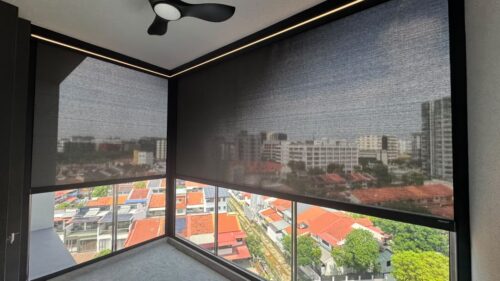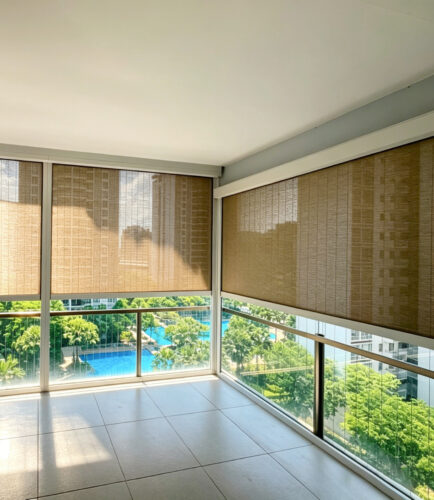
Zip blinds can develop creases or wrinkles because of uneven fabric tension, extended periods rolled up, rolling behaviour or installation alignment. Wind can also create temporary ripples that resemble wrinkles. A persistent crease and a passing wave may look similar, but they do not necessarily have the same cause.
At mc.2, we believe understanding that difference helps you make better decisions about your balcony blinds. Here is what to look for, what you can do and why the design of the system matters.
What Causes Zip Blinds to Crease or Wrinkle?
1. Uneven Fabric Tension
Zip blind fabric needs support to maintain an even appearance across the opening. If tension is uneven or changes, the screen may look loose or develop visible waves.
Importantly, a blind can still raise and lower while its fabric looks uneven. Smooth motor operation alone does not tell you whether the fabric is properly tensioned.
Our view is that fabric appearance deserves attention alongside everyday operation. If the same area repeatedly looks slack when the blind is fully lowered, arrange an assessment rather than assuming it is simply ageing.
2. Long Periods Spent Rolled Up
Have you lowered your blinds after leaving them retracted for several weeks and noticed slight waves?
Flexible fabric can show temporary changes after extended storage around the roller. On our MAGNAZip+ system, minor creases may also appear when the fabric is new. These do not automatically mean the material is permanently damaged.
The useful question is whether the appearance improves after the blind is fully lowered and allowed to settle under the conditions recommended for your model.
3. Fabric Rolling and Tracking
Every use involves winding the fabric onto a tube and unwinding it again. How evenly it rolls matters.
Fabric manufacturers recognise that some woven shade materials have a tendency to track sideways during rolling. This is why fabric construction and straight rolling are relevant considerations when selecting a blind.
Repeated use does not inevitably cause creases. However, if your blind rolls unevenly or the fabric starts gathering to one side, have the rolling and alignment checked instead of repeatedly cycling it to try to flatten the screen.
4. Installation or Track Alignment
A suitable fabric still needs a correctly aligned system.
An uneven frame, incorrectly positioned fabric edges or misaligned tracks can contribute to folds. Some wrinkles that become noticeable later may therefore warrant an installation check rather than being attributed to fabric wear alone.
If creases remain in one area, the bottom bar appears uneven or the blind catches during operation, ask a technician to assess the frame, tracks and fabric seating. Avoid adjusting the tracks yourself.
5. Wind Pressure on the Fabric
Outdoor zip blinds are flexible screens. When wind pushes against them, their surface can bow or ripple while the edges remain retained.
We describe this temporary movement on MAGNAZip+ as a sail effect. Panel dimensions can influence how noticeable it is, with larger screens potentially showing more movement.
Observe the fabric again when conditions are calm. A ripple that disappears after the wind eases is different from a crease that stays visible in the same place.
Does Singapore’s Weather Make Zip Blind Wrinkles Worse?
Singapore balconies expose blinds to sunlight, heat, rain and wind. These conditions make outdoor suitability, correct sizing and installation important.
However, weather alone is not enough to diagnose a crease. Wind may explain temporary movement, while a lasting fold may involve tension, rolling or alignment. At mc.2, we recommend looking at how the complete system behaves rather than blaming every wrinkle on the climate.
When Should You Get Wrinkled Zip Blinds Checked?
Arrange a professional assessment if:
- A pronounced crease remains after the recommended settling period.
- The fabric repeatedly gathers or rolls unevenly.
- The bottom bar sits noticeably out of level.
- Operation becomes jerky, noisy or obstructed.
- You notice damage around the fabric edges or tracks.
Take photographs with the blind fully lowered in calm conditions. Note when the issue started and whether it changes after storage or during wind. These observations can help your installer investigate the cause.
How Does mc.2 Address Zip Blind Creasing?
Our MAGNAZip+ system uses proprietary magnetic technology designed to support fabric tension and a smoother finish. We developed this approach because the appearance of a balcony blind matters beyond the day it is installed.
For MAGNAZip+, our guidance for minor creases is to leave the blind fully lowered for about 30 minutes in suitable conditions. If the creases remain, contact our team for assistance.
Minor fabric waves can still occur. Follow the guidance for your specific model, and have persistent changes assessed rather than assuming every mark will disappear by itself.
Frequently Asked Questions About Zip Blind Creases
Are wrinkled zip blinds always defective?
No. Temporary waves after storage or during wind can occur without a defect. Persistent creases, uneven rolling or changes in operation deserve closer inspection.
Can I iron or steam zip blind fabric?
Do not apply heat unless the manufacturer expressly permits it for your fabric. Ask your installer for a suitable remedy before attempting a home fix.
How can I care for my zip blinds?
Follow your model’s cleaning and wind-operation instructions. Keep the tracks clear, avoid forcing a resistant blind and allow the fabric to dry before rolling it up after cleaning, where recommended by the manufacturer.
Get Advice on Zip Blinds for Your Balcony
At mc.2, MAGNAZip+ brings our proprietary magnetic technology into a product designed around a familiar homeowner concern: keeping balcony blinds smooth over time.
See the difference for yourself at our showroom.
Visit us at Vertex, 33 Ubi Ave 3, #01-28/29, Singapore 408868. Walk-ins are welcome.
For a free estimate, send us a balcony photo, floor plan or measurements. Our team will help you explore MAGNAZip+ for your home.